
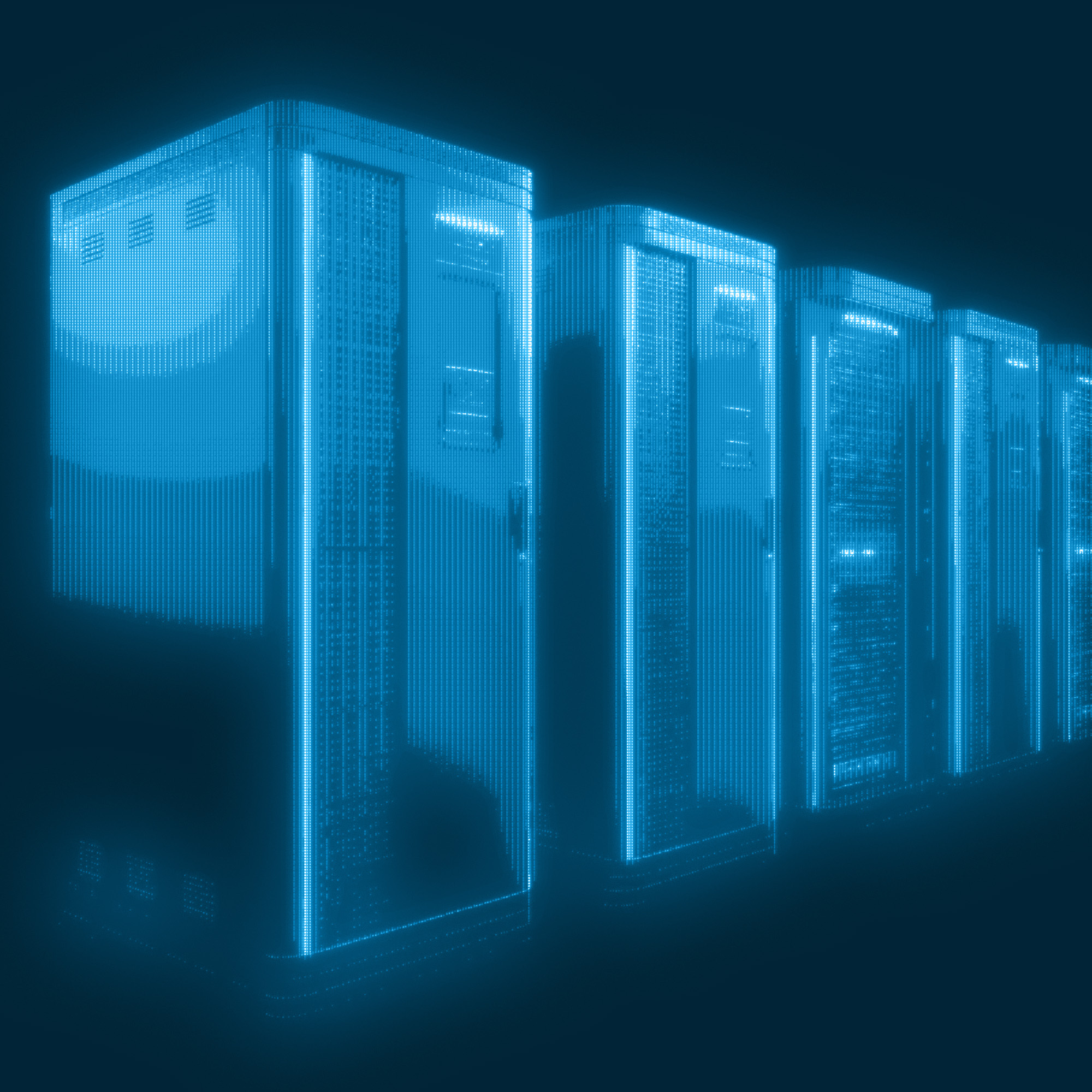
The rise of generative AI is causing a new shift in power. Access to computing power is becoming more important than ever. Whereas software used to make the difference, infrastructure now determines who can continue to innovate and grow. That is why large companies are investing billions in data centers, chips, and networks. For organizations, infrastructure is no longer purely an IT issue, but an essential part of their strategy.
The new scale of AI investments
According to Gartner, global spending on AI-related infrastructure will exceed $1.5 trillion by 2025. Organizations are investing record amounts in computing, storage, and network capacity.
An illustrative example is the Danish Centre for AI Innovation, which was the first in Europe to deploy an NVIDIA DGX B300 system . This significantly increases the region's computing power and positions it as a European hub for AI research. Such mega deals show that hardware ecosystems are becoming just as important as the models themselves.
This trend has three clear consequences for the market:
- Consolidation of power: only a handful of players can bear the scale and capital intensity of these investments.
- Regional competition: Countries and regions are positioning themselves as strategic data centers for AI development.
Acceleration of innovation cycles: increased computing capacity enables faster model development and validation.
Strategic implications for organizations
The shift to large-scale infrastructure is forcing organizations to rethink their strategy. Access to computing power is no longer a facility, but a source of competitive advantage. This requires a balance between technology, costs, and governance.
- Scale is power: those with access to advanced infrastructure can train more complex models, iterate faster, and accelerate innovation. Scale determines the pace of progress.
- Data sovereignty and location choices: The spread of data centers across continents requires carefully considered choices regarding cloud partners, regulations, and data management. European organizations must balance innovation with compliance and privacy legislation.
- Cost versus value: it is not the size of the investment that determines success, but the efficiency of use. Smart orchestration of workloads, energy management, and model optimization make the difference between cost center and competitive advantage.
Architecture and talent: without the right skills and process architecture, infrastructure remains an expensive box of promises. Strategic management requires teams that can connect technology with business goals.
Why this has momentum right now
The value of AI grows as models become more widely applicable and embedded in workflows. This increases the demand for powerful infrastructure.
At the same time, scaling up brings new vulnerabilities: chip shortages, rising energy needs, and pressure on cooling and network capacity. TechCrunch warns that these dependencies are redefining the playing field.
In Europe, policymakers are accelerating progress with subsidies, partnerships, and green data center projects. The battle for AI infrastructure is not only technological, but also geopolitical.
What does this mean for your business?
The shift to large-scale AI infrastructure affects every organization, regardless of sector or size. It determines not only how you can deploy AI, but also how quickly you can do so. Companies that are now reviewing their infrastructure strategies are creating room for growth, efficiency, and innovation. Others risk falling behind in an increasingly fast-paced market.
To guide these choices, companies can be guided by four strategic focus areas:
- Evaluate your current infrastructure position: map out capacity, costs, and bottlenecks. Understand where your AI ambitions are being held back by limitations in computing power, data, or architecture.
- Consider collaboration or co-investment: scale does not always have to be built internally. Through partnerships with cloud or data center providers, you can gain access to advanced technology without the full capital expense.
- Connect infrastructure with your data and model strategy: infrastructure alone does not create value. The power lies in an integrated pipeline in which data, models, and hardware work together seamlessly.
- Keep an eye on sustainability and cost control: Energy consumption, cooling, and operational efficiency are becoming decisive factors in the ROI of AI projects. Sustainable scaling is not only good for the environment, but also for the bottom line.
By answering these strategic questions, you can turn infrastructure from a cost center into a growth accelerator. Organizations that invest in flexibility and scalability today are laying the foundation for competitive advantage in the AI era.
The emergence of large-scale AI infrastructure marks the transition from experimentation to industrialization. For organizations, now is the time to position infrastructure as a strategic priority. Those who invest now in scalable, efficient, and sustainable foundations will not only build capacity, but also competitiveness. In a world where speed, scale, and intelligence converge, those who look ahead will win.